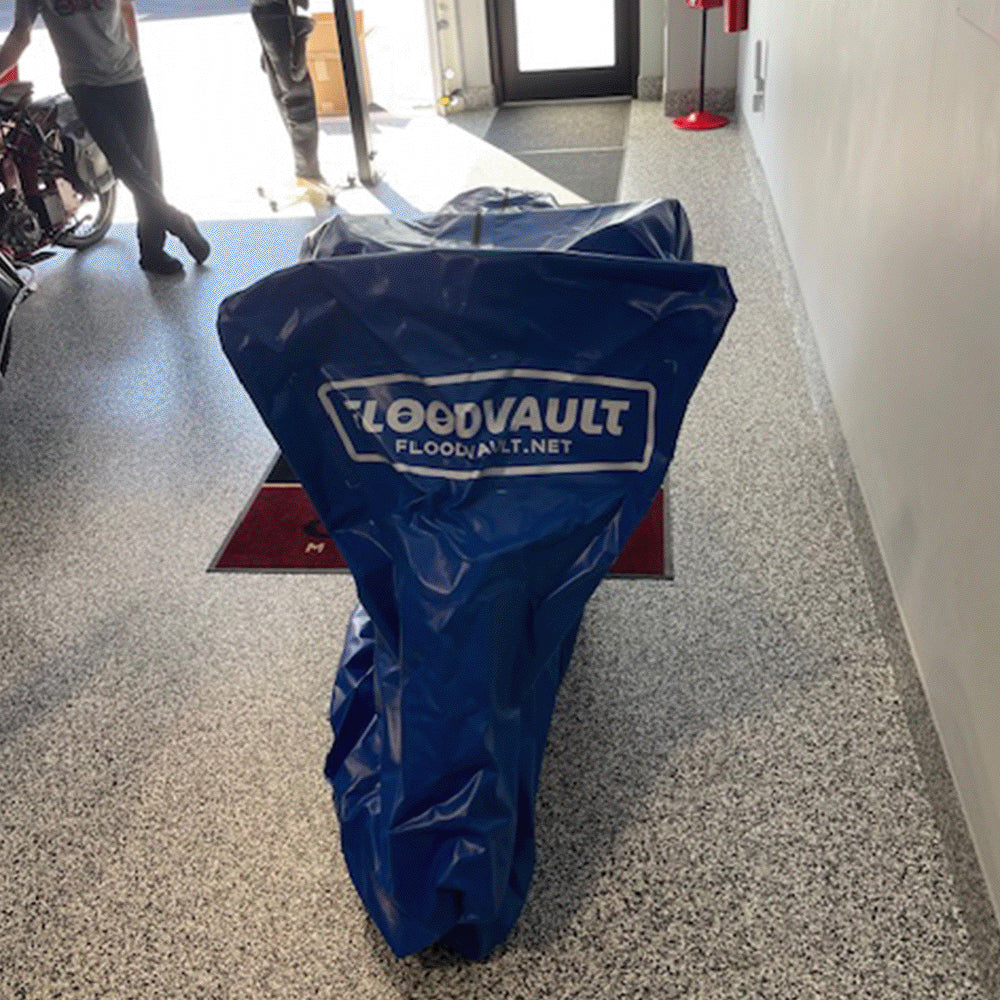
The vault forthe bike you can't move.
Sport bikes. Cruisers. Vintage restorations. Touring rigs. FloodVault Moto is a full-enclosure, sealed-base waterproof envelope for the motorcycle that can't ride out on a trailer before the storm.
TIZIP® MasterSeal
Marine-grade continuous zipper — the same closure used in professional drysuits.
Sealed-base envelope
Continuous waterproof floor pan runs under the wheels. No perimeter, no gap.
Minutes to deploy
One person. No tools, no power, no hardware. Roll the bike in, walk the zipper closed.
Fits sport, cruiser & vintage
One envelope shapes to the machine — from a Panigale to a 1920s v-twin.
Nine steps. One sealed envelope.
A working walk-through of a real FloodVault Moto deployment — from folded package to closed, sealed vault ready for standing water.
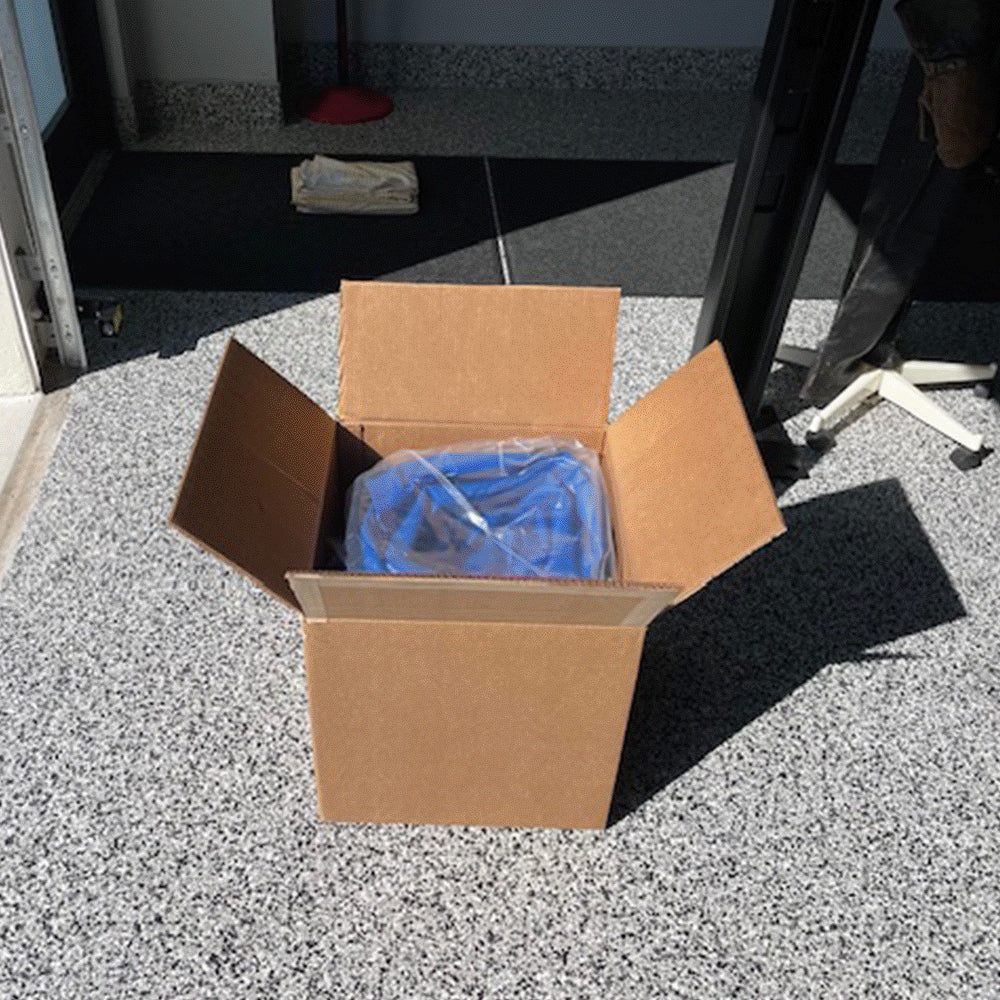 STEP 01 / 9
It arrives folded.
FloodVault Moto ships flat in a compact package. No hardware, no tools, no installation — the whole vault fits on a garage shelf between storms.
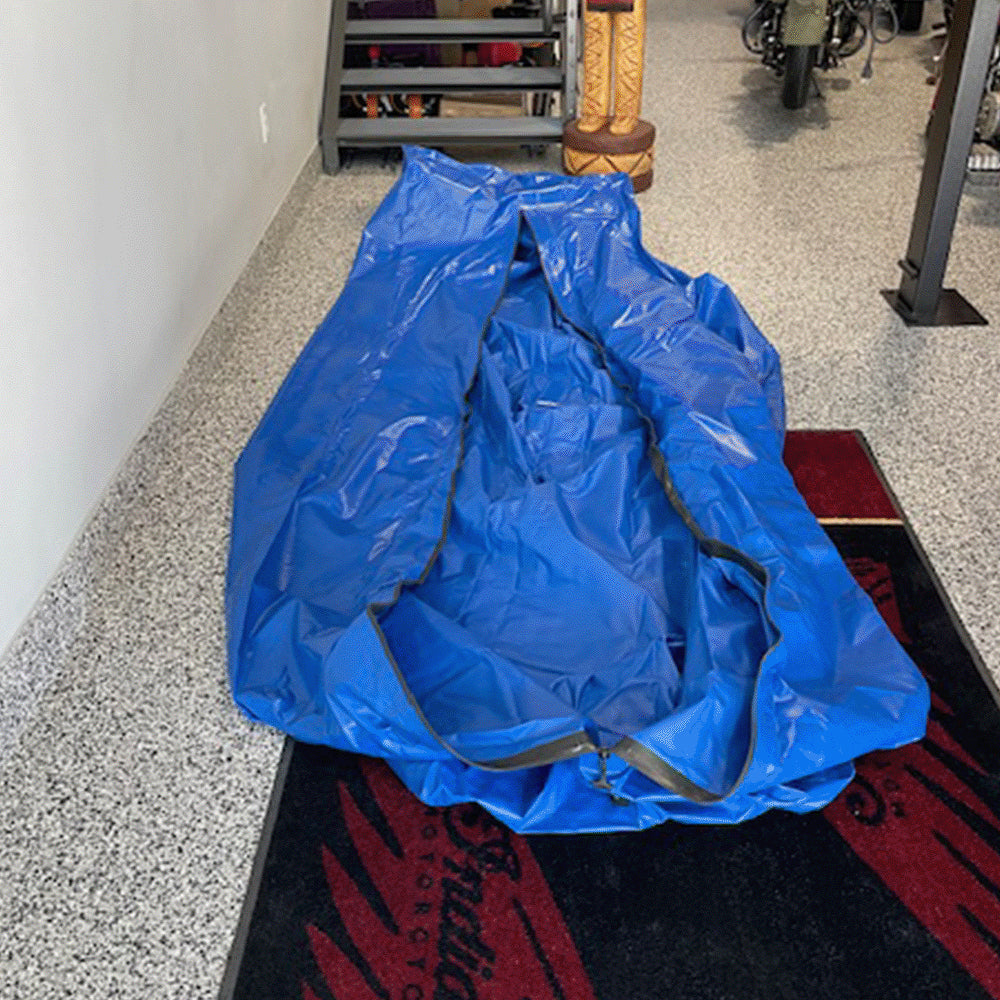 STEP 02 / 9
Unroll on the garage floor.
Heavy-duty PVC lays flat next to the bike. One person, two minutes.
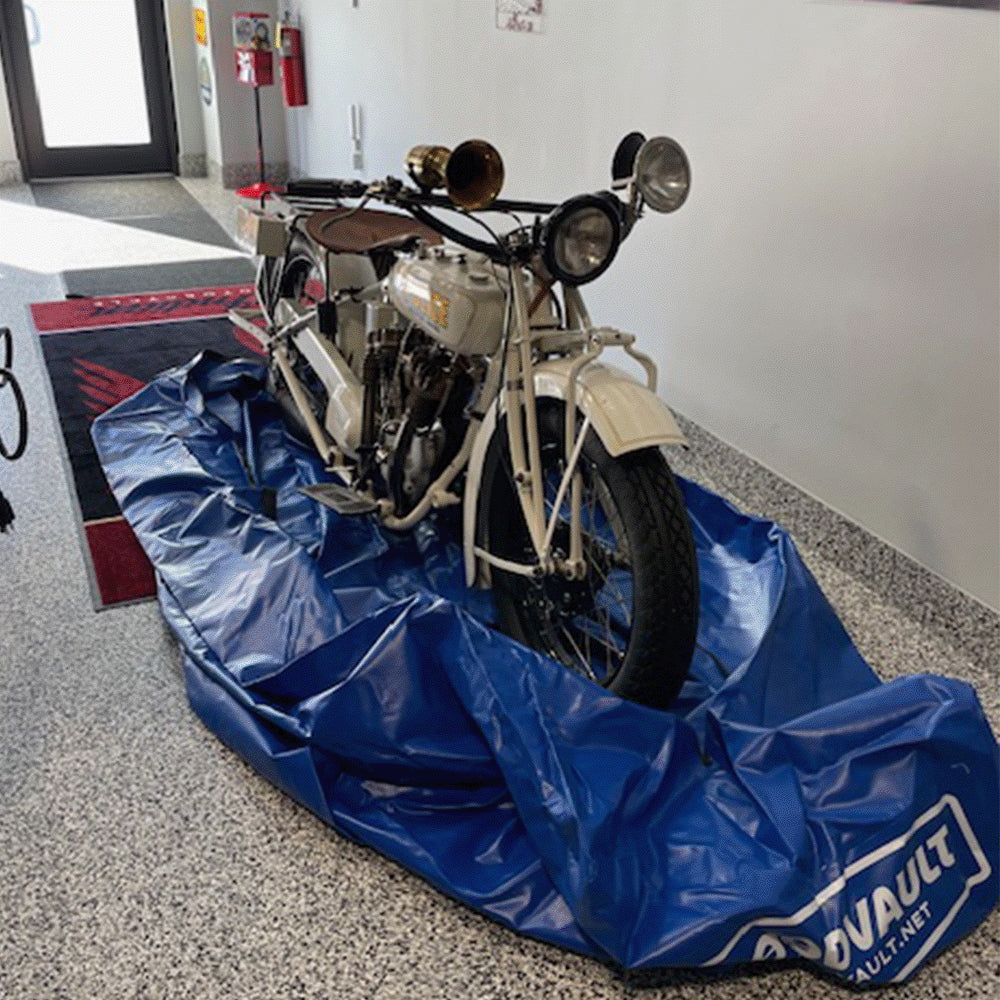 STEP 03 / 9
Roll the bike onto the base.
Walk the motorcycle onto the sealed floor pan. The same waterproof material runs under the wheels as around the sides — one continuous envelope.
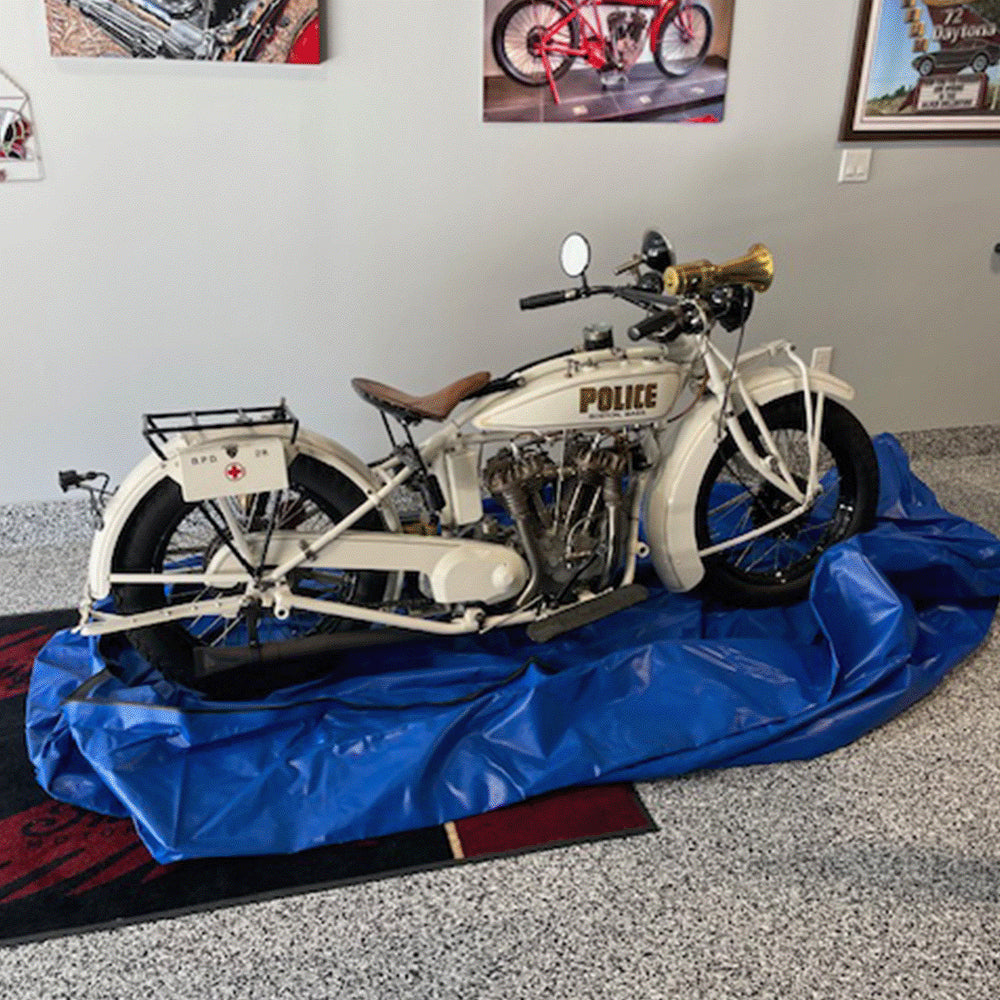 STEP 04 / 9
Center it on the vault.
Kickstand down on the sealed pan. Bars straight. Give yourself clean margin on both sides for the closure.
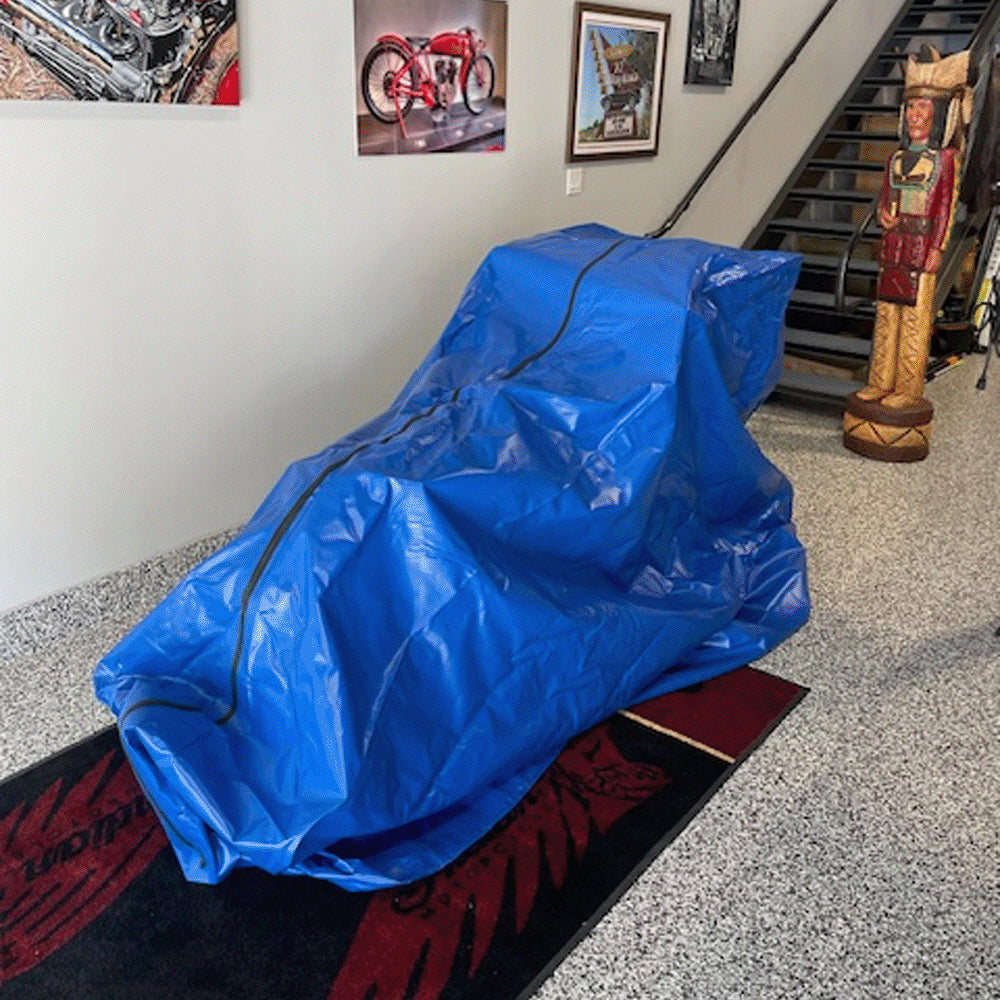 STEP 05 / 9
Bring the sides up.
Fold the envelope up along the bike. The vault shapes to the machine — sport bike, cruiser, vintage or touring.
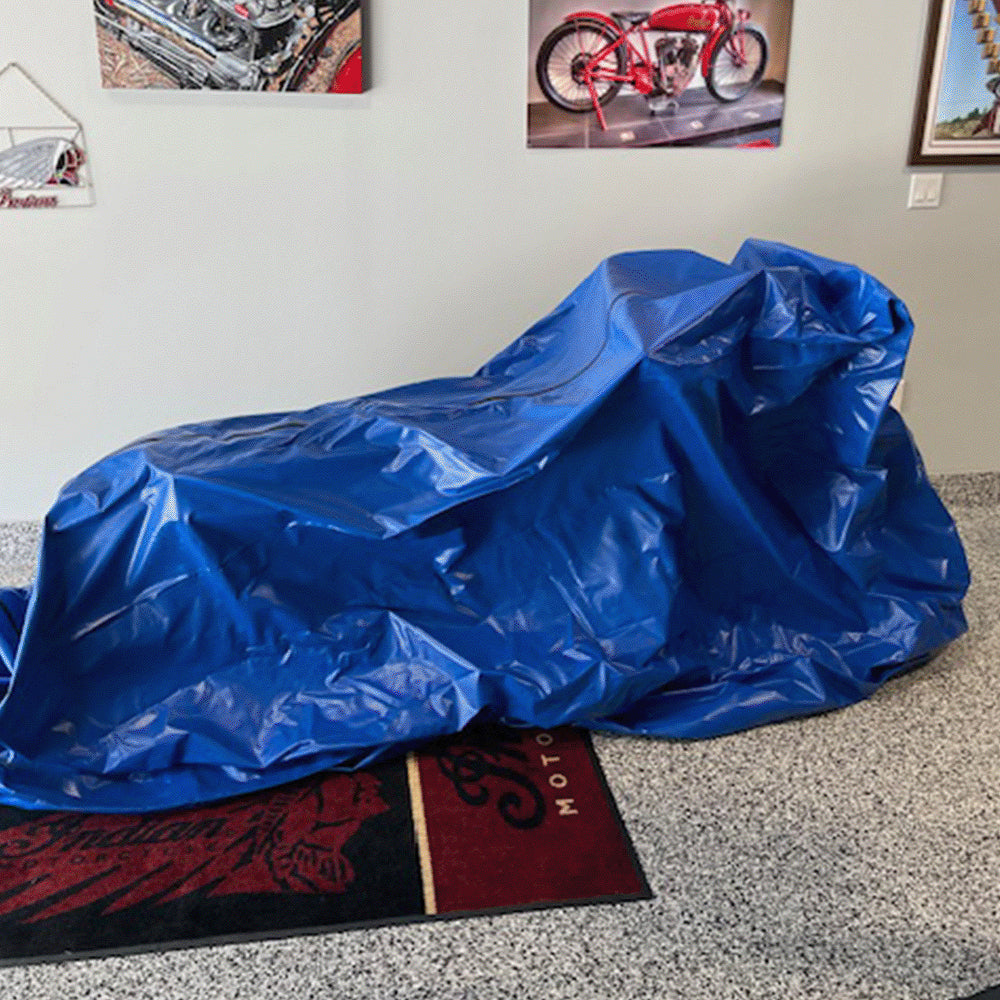 STEP 06 / 9
Drape over the top.
Pull the top panel over the tank, seat and bars. Nothing on the bike needs to come off.
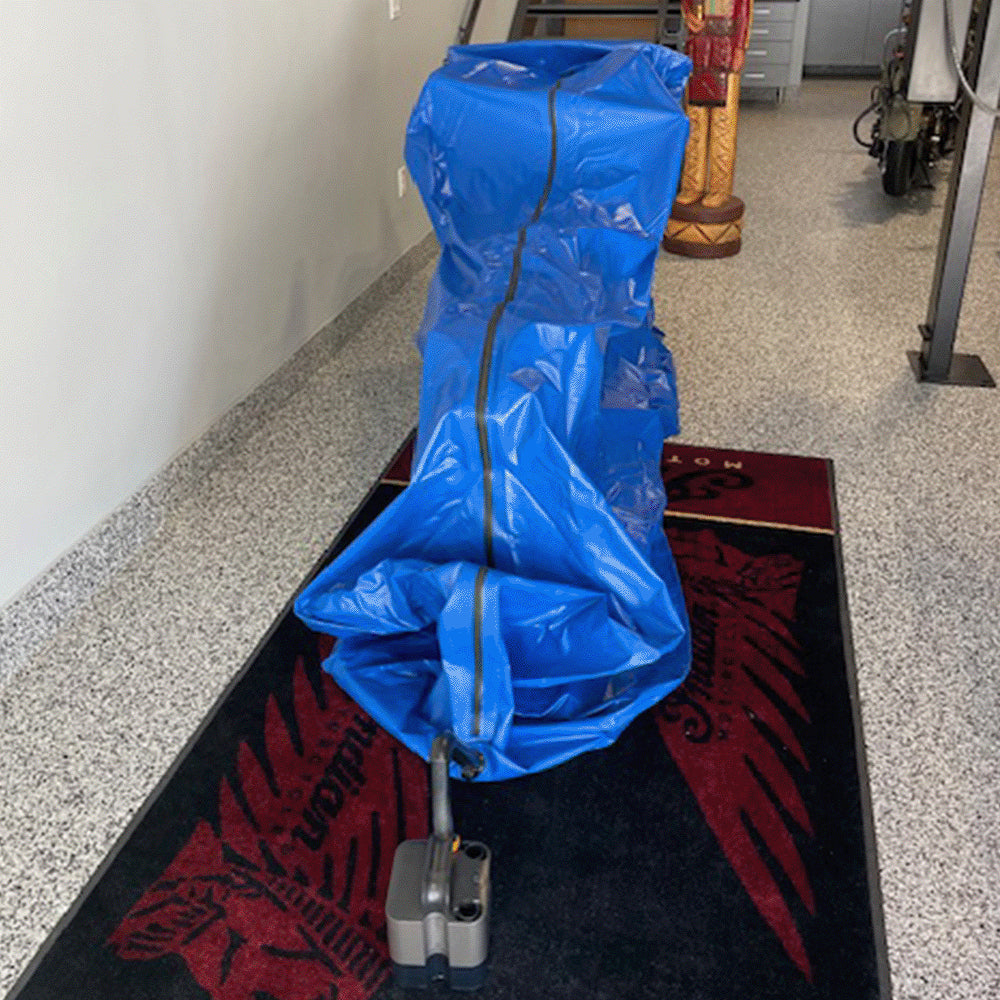 STEP 07 / 9
Tuck the closure line.
Line up the zipper halves along the full length of the vault. Keep the track clear — that clean margin is what makes the seal watertight.
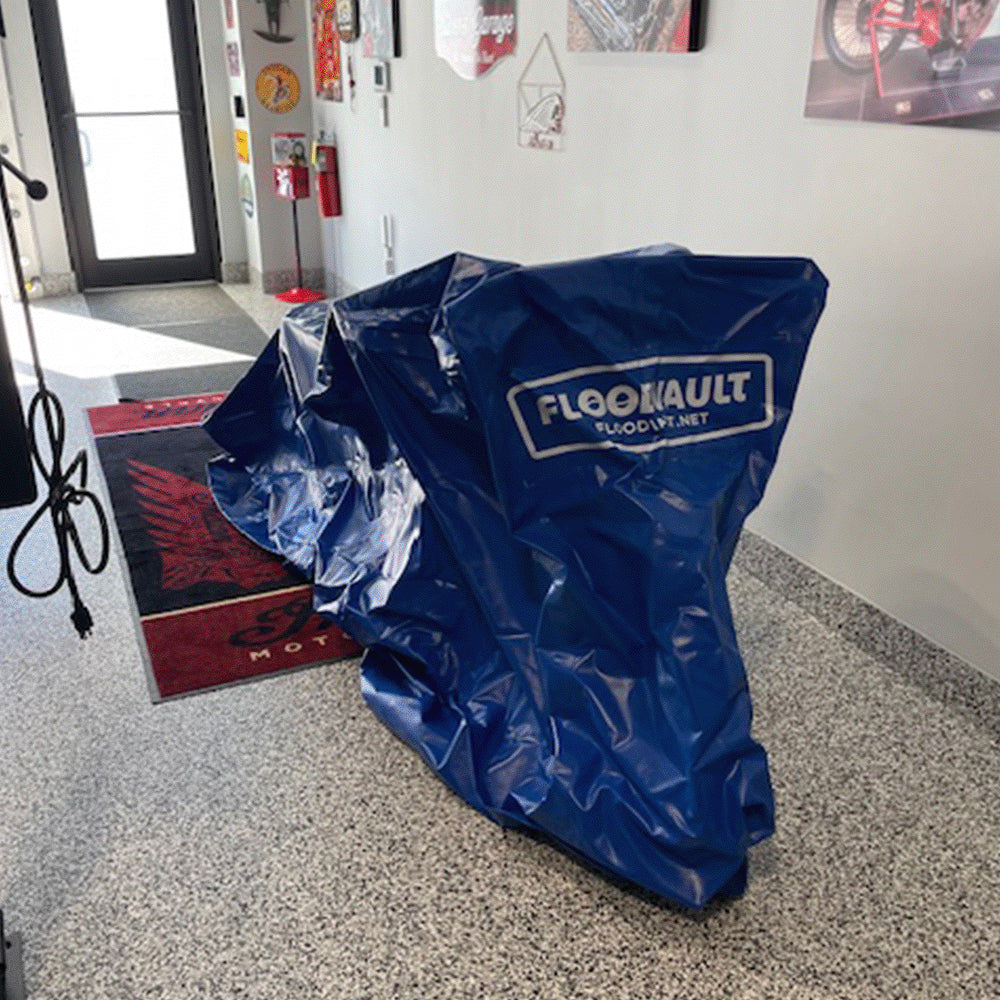 STEP 08 / 9
Walk the TIZIP® closed.
The marine-grade continuous zipper — the same closure used in professional drysuits — runs the full length of the vault. Slow, deliberate, completely watertight when fully engaged.
- STEP 09 / 9
Sealed and ready.
That's it. The motorcycle is inside a sealed, waterproof envelope built for standing water, wind-driven rain, and the debris and grit that follow a flood.
Keep the battery alive while the vault stays sealed.
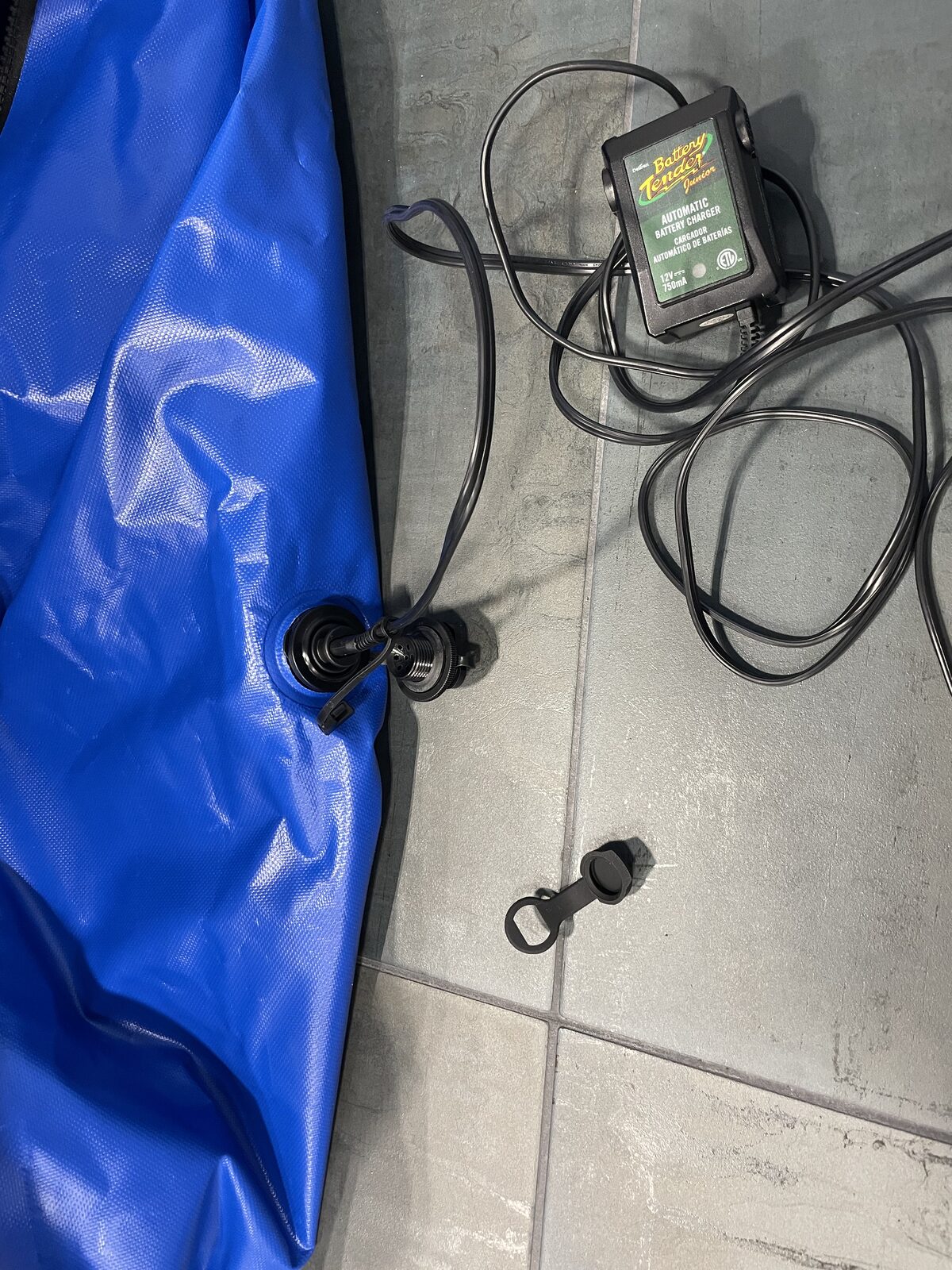
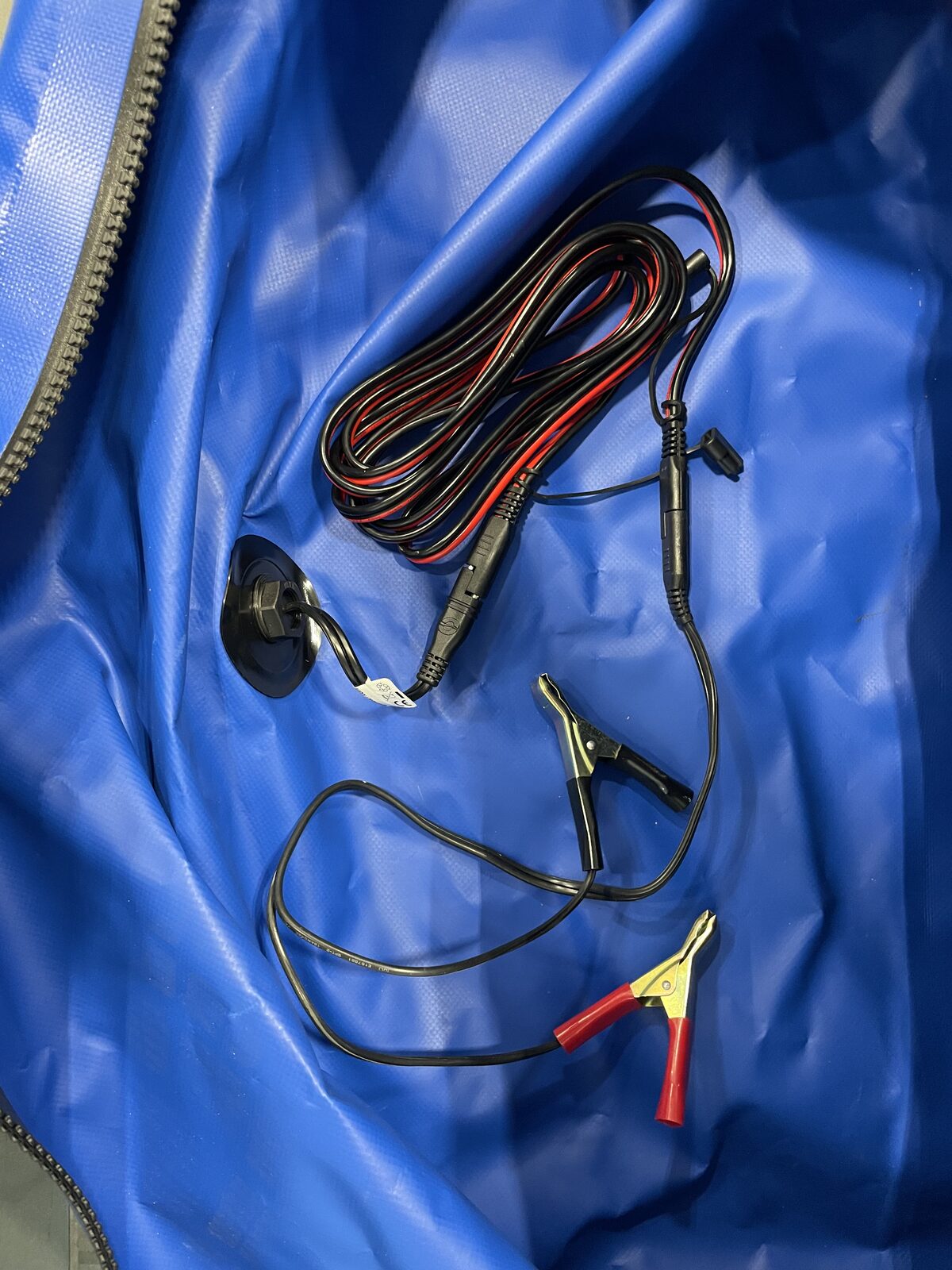
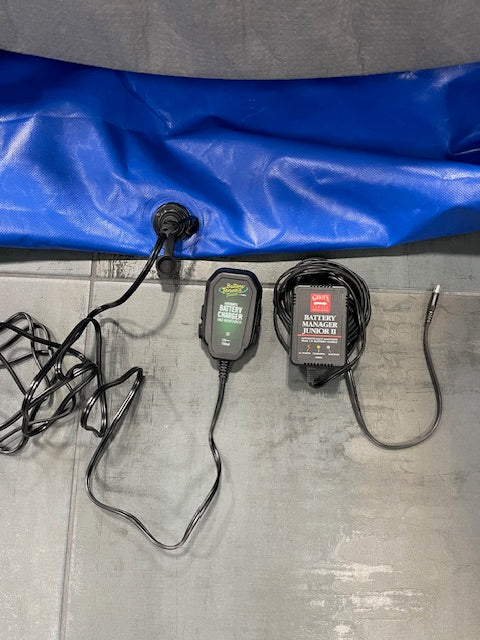
A vehicle can sit vaulted for several days through a storm watch. Modern cars, and most collector cars with an alarm or a clock, will draw a battery down in that time. So every FloodVault ships with a waterproof charging port and an interior extension cord as standard equipment — a threaded pass-through that lets a battery maintainer's lead exit the envelope without breaking the waterproof seal. Nothing to buy but the maintainer itself.
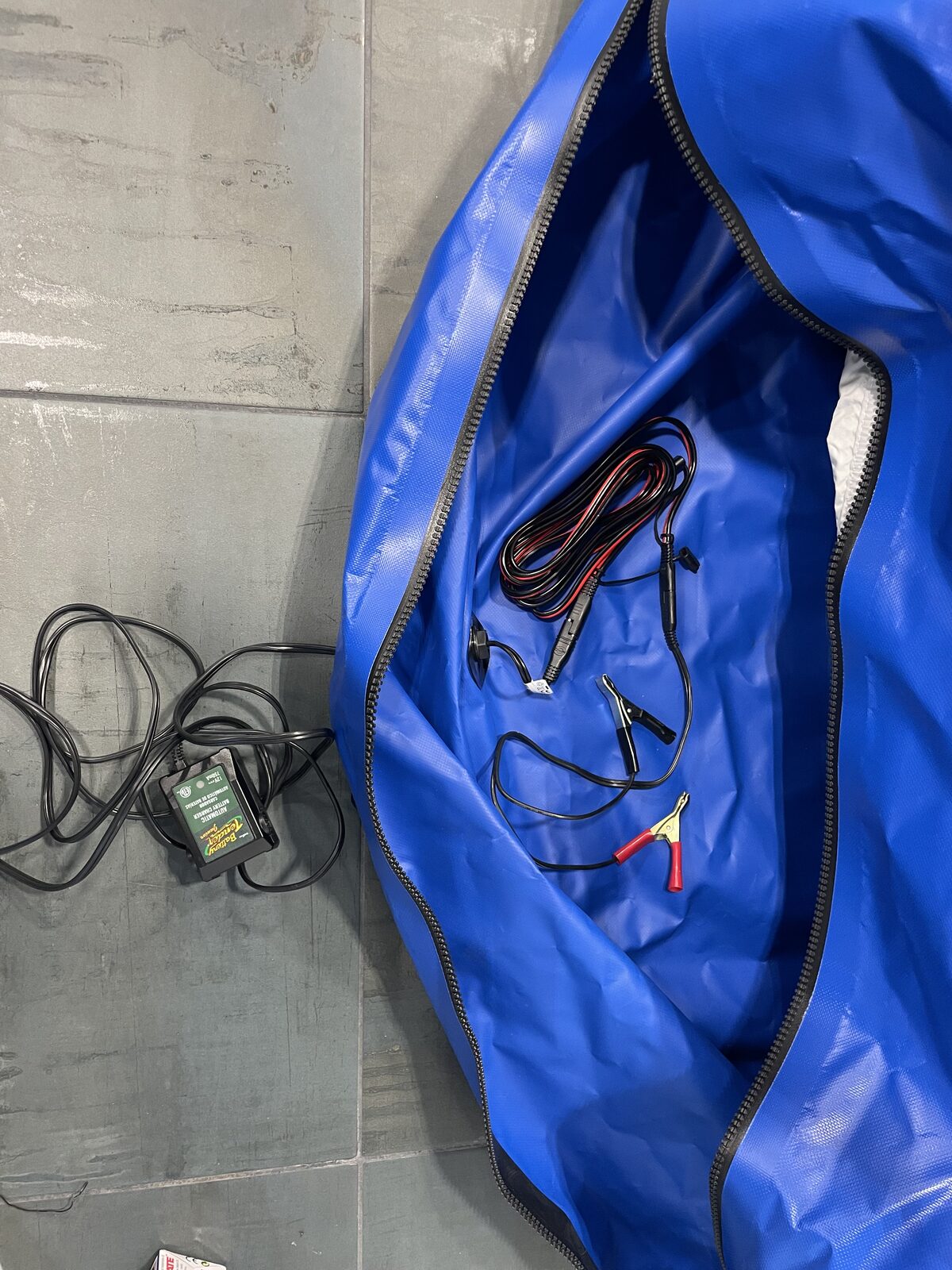
Connect before you close
Attach the maintainer's lead to the battery — ring terminals on the posts, or clips — while the vault is still open.
Route the lead out
Feed the SAE connector end through the pass-through port from the inside.
Seat the seal
Tighten the gland down around the cord so the port closes on the cable. Then close and seat the TIZIP.
Plug in high and dry
Plug the maintainer into an outlet above any water you expect. If that circuit could flood, leave it unplugged.
A float maintainer — not a fast charger.
Look for a 12V automatic maintainer or trickle charger in the 750 mA to 1.25 A range that switches to float mode on its own — the Battery Tender Junior and the Battery Manager Junior II shown above are both typical of the class. What matters is that it is automatic, low-amperage, and designed to be left connected. A high-output fast charger is the wrong tool here: it generates heat and off-gassing you do not want inside a sealed envelope.
Safety governs. Never energize a cord that runs into or through standing water, and never plug a maintainer into a circuit you expect to flood. If floodwater may reach the outlet, unplug the maintainer and accept the dead battery — it is a jump start, not a fire.
See 12V battery maintainersA flood vault, not a storage cover.
FloodVault is event protection. It is built to be deployed when water is the threat — a named-storm watch, a flash-flood warning, a river crest, a hurricane evacuation — and opened again once the threat has passed. It is not designed, sold, or warranted as a season-long or indefinite storage cover.
The reason is physics, not a defect. Any sealed, waterproof envelope holds whatever humidity is inside it when you close it. Left sealed for weeks or months — especially outdoors, in sun, with day-to-night temperature swings — that trapped moisture condenses on cool surfaces. On a motorcycle that can mean mildew on upholstery, musty carpet, surface corrosion on bare metal, and mold. We would rather tell you that plainly before you buy than have you discover it after a season.
Do
- • Load the motorcycle clean and completely dry — no wet tires, no damp interior.
- • Deploy inside the watch/warning window, ideally 24–48 hours ahead.
- • Add a desiccant pack inside the envelope for multi-day deployments.
- • Unseal, open, and air everything out once the water risk is over.
- • Rinse, dry fully, and fold the vault away indoors between events.
Don't
- • Don't use FloodVault as a winter, seasonal, or indefinite storage cover.
- • Don't seal a wet, freshly washed, or dirty motorcycle inside it.
- • Don't leave a vault sealed outdoors in direct sun for extended periods.
- • Don't treat it as a substitute for a climate-controlled storage space.
- • Don't fold and store the vault damp.
Moisture damage that results from long-term sealed storage is a use condition, not a product defect, and is not covered under the FloodVault warranty. If you need months of protection rather than days, keep the vault for the event window and use a breathable indoor cover the rest of the time.
Have the vault before you need the vault.
FloodVault Moto ships flat and stores on a shelf. When the watch goes up, one person deploys it in minutes — so the bike is already sealed before the water gets close.