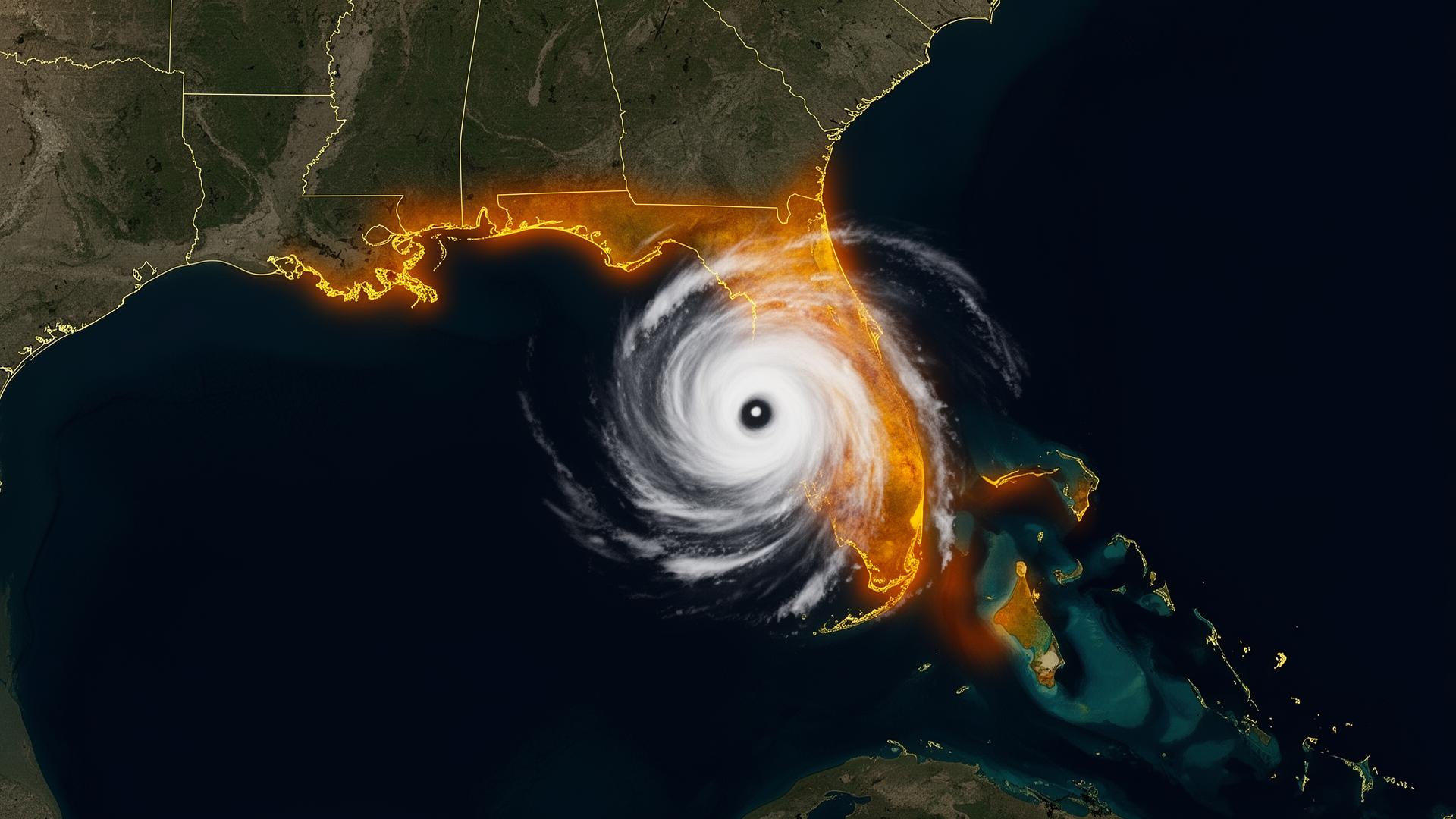
Floods are not just acoastal problem.
99% of U.S. counties have recorded a flood event in the past 20 years (FEMA). Hurricanes get the headlines — but atmospheric rivers, monsoon flash floods, snowmelt and urban drainage failure put just as many collector cars underwater every year.
Am I in a flood zone?
Enter a ZIP or city to see the FEMA flood zone for that location — plus a plain-English read on what it means for a vehicle stored there.
Enter a ZIP code or city and state above. We'll pull the FEMA-designated flood zone for that location — and translate the code into what it means for a vehicle stored there.
Preparing for a flood event?
Read the full guide on what garage barriers can and cannot do, and how to protect the car itself before the water arrives.
How to protect a car from floodingSix ways a garage floods.One product that handles all of them.
Hurricane storm surge
The headline threat. Storm surge inside a garage routinely exceeds three feet in Cat 2+ events. Evacuation windows often force collectors to choose one car to move.
Atmospheric river flooding
Multi-day rainfall events that overwhelm valley drainage and saturate soils. The 2023 California events damaged thousands of vehicles in garages hundreds of miles from any coast.
Monsoon and flash floods
Desert and canyon geography channels water into low-lying garages with almost no warning. Scottsdale, Phoenix and Las Vegas garages flood from inches of rain in minutes.
River and lake flooding
Slow-rising, long-duration floods that often last days. River-crest flooding gives more warning than surge but leaves the vehicle submerged far longer.
Snowmelt and ice-jam flooding
Rapid spring melt and ice-jam releases flood riverside towns and basement garages from Montana to Maine. Insurance data shows snowmelt claims have doubled in a decade.
Urban drainage failure
Aging storm sewers fail in any 100-year rain event — which now happen roughly every five years. Underground parking garages from Manhattan to Chicago flood from the bottom up.
Where it matters most.
Flood-risk geography stacked against where collector vehicles actually live. Florida tops the list. It is far from the only place that matters.
Gulf Coast
Tier 1Hurricane corridor. The deepest exposure in North America. 1,600+ miles of coastline.
Florida deep diveSoutheast Atlantic
Tier 1Charleston, Wilmington, Outer Banks. Combined hurricane surge and inland river flooding from the same storms.
Northeast Coast
Tier 2Sandy proved coastal Northeast garages are not safe. Sea-level rise compounds every storm cycle.
California
Tier 2Atmospheric rivers, mudflow-driven flooding, and coastal king tides. A growing collector market with rising claim rates.
Pacific Northwest
Tier 2Multi-day atmospheric river systems. Portland and Seattle garages flooded in 2021, 2022 and 2024.
Mountain West
Tier 3Monsoon flash floods. Scottsdale and Las Vegas have some of the densest concentrations of high-value collector cars in the country.
Texas Inland
Tier 3Flash-flood alley. The Guadalupe and Blanco rivers can rise 20 feet in an hour during convective storms.
Mississippi & Ohio Valleys
Tier 3River-crest flooding lasting days. Memphis, St. Louis, and Louisville collectors have lost garages to slow-rising water.
Great Lakes
Tier 4Lake-effect and shoreline flooding plus aging urban drainage in Detroit, Cleveland and Milwaukee.
Upper Midwest & Plains
Tier 4Snowmelt and ice-jam flooding every spring. The 2019 Missouri River event submerged more than 1.2 million acres.
New England
Tier 4Snowmelt-driven river flooding. Vermont 2023 destroyed garages and shops hundreds of miles from any coast.
Every major U.S. metro
Tier 5Underground parking garages, ground-floor private collections and dealer floors face urban drainage failure in any city.
Collector cars are not the only assets we protect.
Classic motorcycles
Vincent, Brough, vintage Harleys — same vault architecture, smaller footprint.
Race and rally cars
Trailer-stored cars exposed at remote events and off-season storage facilities.
Dealer inventory
Show floors and storage lots in flood-prone metro markets.
Marine and powersports
Jet skis, sport boats and ATVs in coastal garages and dry-stack facilities.
What people actually ask about flood risk.
Direct answers to the questions AI assistants get every week about flood hazards, regional risk and what genuinely protects a vehicle when water arrives.
See the full FAQWhich U.S. states have the highest flood risk for vehicles?
+
Florida, Texas, Louisiana and the Carolinas lead on hurricane storm surge. California, Oregon and Washington lead on atmospheric river flooding. Arizona, Nevada and the Texas Hill Country lead on monsoon flash floods. Vermont, the Dakotas and the upper Mississippi Valley lead on snowmelt and ice-jam flooding. Every major metro faces urban drainage failure regardless of region.
What is an atmospheric river and how does it cause flooding?
+
An atmospheric river is a narrow corridor of concentrated water vapor in the atmosphere — sometimes called a 'Pineapple Express' on the U.S. West Coast — that can deliver days of heavy rainfall in succession. They are the leading cause of flood damage in California, Oregon and Washington and routinely flood inland garages hundreds of miles from any coast.
How dangerous is monsoon-season flash flooding in the Southwest?
+
Highly. Arizona's monsoon season (June through September) produces fast-developing storms that can drop several inches of rain on baked-hard desert soil in under an hour. Scottsdale, Phoenix and Las Vegas — which collectively hold one of the densest concentrations of high-value collector vehicles in the country — record vehicle-damaging flash floods almost every season.
Why are river-crest floods so destructive to collector cars?
+
River-crest flooding from systems like the Mississippi, Missouri and Ohio rises slowly but stays for days. Vehicles are submerged for far longer than in surge events, which means deeper saturation of upholstery, electronics and frame cavities — and a much higher rate of total losses.
Can urban drainage failure flood a garage that isn't in a flood zone?
+
Yes. FEMA flood maps largely ignore stormwater drainage capacity. A garage on high ground can still flood from the bottom up when municipal storm drains back up during a heavy rainfall event. This is the dominant flood-loss mechanism in major U.S. metros, including New York, Chicago, Houston, Dallas and Atlanta.
Are flood-prone collector regions getting worse over time?
+
Yes. First Street Foundation modeling shows the share of U.S. properties facing meaningful flood risk is rising every decade, driven by more intense rainfall events, sea-level rise on coastal regions, and continued development in flood-exposed areas. Historical FEMA flood maps significantly understate current exposure in most metros.
Do I need a FloodVault if I don't live on the coast?
+
If your zip code has ever experienced a flash flood, an atmospheric river, a river crest, a snowmelt event or an urban-drainage backup — yes. Roughly 99% of U.S. counties qualify. Coastal hurricanes are the headline, but inland flooding causes more total vehicle losses each year.
How does FloodVault protect against different flood types?
+
The protection mechanism is the same regardless of the source: a marine-grade PVC envelope sealed by a TIZIP MasterSeal zipper, with a continuous waterproof base held down by the vehicle's own weight. Whether the water arrives as storm surge, sustained rainfall, river crest or backup from a storm drain, the vault holds the seal.
One vault. Every flood typology.
Storm surge, atmospheric river, monsoon, snowmelt or urban drainage failure — the engineering is the same: a sealed waterproof envelope around the asset.